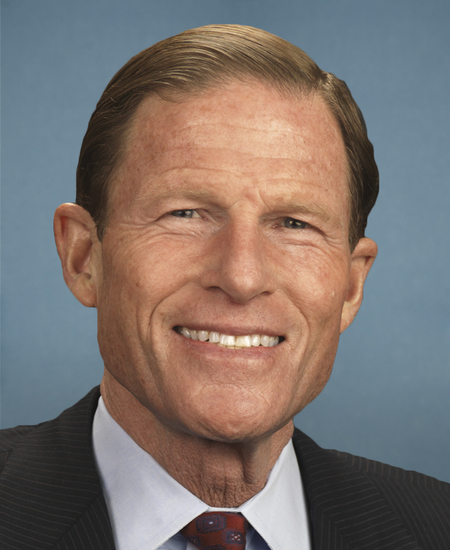
Corporate Crime Database Act of 2026 (S. 4104)
Short Title – Corporate Crime Database Act of 2026
Status – Introduced in the Senate; referred to the Committee on the Judiciary
Introduced – March 16 2026 by Sen. Richard Durbin (and Sen. Richard Blumenthal)
Key Sponsor – Richard J. Durbin (D‑IL) and Richard Blumenthal (D‑CT)
Related Legislation – H.R. 4724 (companion bill)
1. Purpose of the Bill
The Act directs the Director of the Bureau of Justice Statistics (BJS) to create and maintain a publicly searchable database of federal enforcement actions involving corporate offenses. Its aim is to:
| Goal |
How it will be achieved |
| Greater transparency |
Release detailed records of corporate violations and enforcement outcomes. |
| Data‑driven oversight |
Provide Congress and the public with metrics on recidivism, severity, and victim impact. |
| Improved enforcement coordination |
Mandate standardized information collection from every Federal agency. |
2. Core Provisions
A. Definitions (Section 305)
| Term |
Meaning |
| Business entity |
Corporation, partnership, LLC, LP, or other legal entity. |
| Corporate offense |
Violation (or alleged violation) of federal law by a business entity or its employee, plus any violation the BJS deems a corporate offense. |
| Enforcement action |
Any concluded administrative, civil, criminal, deferred prosecution, settlement, or non‑prosecution agreement. |
B. Database Establishment (Section 305(b))
- Timeline – Within 7 years of enactment the Director must:
- Collect, aggregate, and analyze enforcement action data.
- Publish the database on the BJS website.
- Inclusion Criteria – Each record must contain:
- Business entity or individual prosecuted.
- Employer (if applicable).
- Parent company (if applicable).
- Offense type & associated statute.
- Federal agency that initiated enforcement.
- Outcome, including settlement terms, penalties, or approvals.
- Unique identifier for cross‑referencing.
- Any additional data the Director deems necessary.
C. Information Collection (Section 305(d))
- Guidance – Within 180 days of the Act’s passage, the Director must publish instructions for Federal agencies on:
- What information to submit.
- How, when, and how often to send it.
- Mandatory Cooperation – All identified federal agencies must comply and submit the data per the guidance.
D. Publication & Updates (Section 305(e))
- Initial Release – Within 1 year of enactment, the database must be publicly available in a searchable, downloadable format.
- Continuous Updates – The database must be refreshed each time new information is received (i.e., each time enforcement data is collected).
E. Congressional Report (Section 305(f))
- Reporting Cadence –
- Within 1 year after the database launch.
- Annually thereafter.
- Report Contents –
- Data description & analysis (recidivism, types of offenses).
- Estimate of societal impact the offenses impose.
- Recommendations (in consultation with the Attorney General) for legislative or administrative improvements.
F. Auxillary Amendments
- Section 21 3520A(b) of Title 44 is modified to streamline how federal agencies can improve data collection, digitalization, standardization, and sharing under the new database mandate.
3. Stakeholders & Impact
| Stakeholder |
Impact |
| Bureau of Justice Statistics |
New operational responsibilities, staff, data systems, and reporting. |
| Federal Agencies |
Must develop internal processes to capture, submit, and maintain corporate enforcement data. |
| Corporate Entities & Employees |
Their enforcement actions become public; could influence reputation and compliance practices. |
| Victims & General Public |
Gain access to detailed information about corporate misconduct and its consequences, supporting transparency and advocacy. |
| Congress & Policymakers |
Receive annual analytical reports informing policy decisions and potential legislative changes. |
4. Timeline Overview
| Milestone |
Target Date |
| Guidance issued |
180 days post‑enactment |
| Database operational |
Within 7 years |
| First public release |
1 year post‑enactment |
| Initial Congressional report |
1 year after database launch |
| Annual reporting |
Yearly thereafter |
5. Bottom Line
S. 4104 establishes a centralized, publicly accessible record of federal corporate offenses and enforcement outcomes. By mandating systematic data collection and analysis, the bill aims to bolster corporate accountability, provide lawmakers with actionable intelligence, and empower the public to track and understand corporate wrongdoing. Its successful implementation will hinge on robust cooperation from all federal agencies and a sustained commitment from the BJS to maintain the database’s accuracy, timeliness, and usability.